
Where Should You Move After Downsizing? Bay Area Options to Consider

Downsizing isn't only about moving into a smaller home.
For many Bay Area homeowners, it is an opportunity to rethink where they want to live, how they want to spend their time, and what they want their next home to provide.
After years in a larger single-family home, you may no longer need multiple bedrooms, a large yard, or extensive storage. Instead, you may want a home that is easier to maintain, closer to restaurants and services, or better connected to family, friends, and transportation.
So, where should you move after downsizing?
The answer depends on your lifestyle, budget, priorities, and what you want your next chapter to look like.
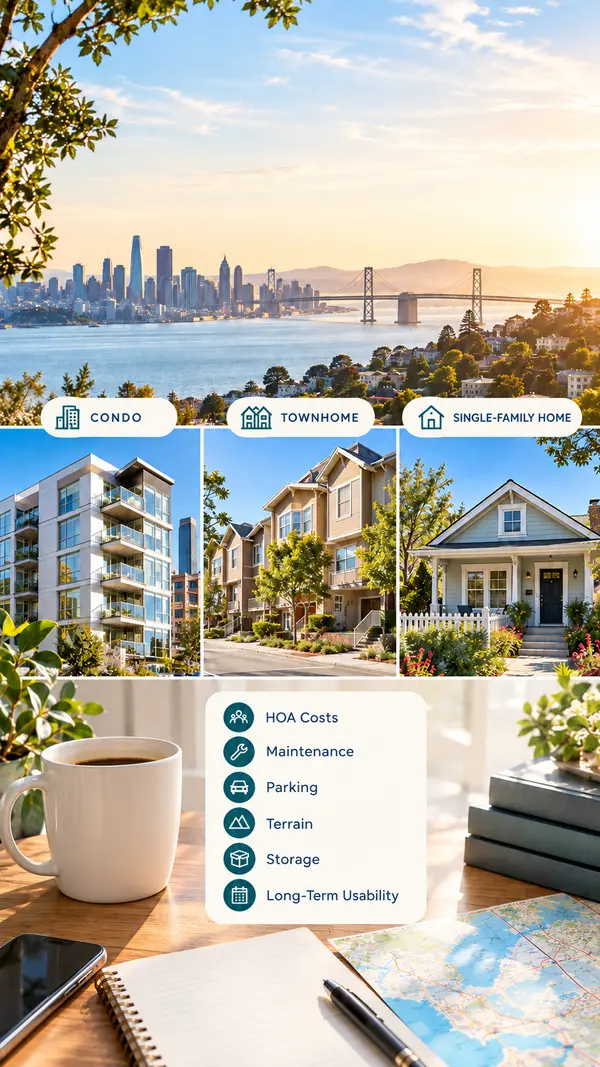
The Bay Area offers a wide range of options—from low-maintenance condominiums and townhomes to smaller single-family homes in established neighborhoods.
Start With Your Lifestyle, Not Just Square Footage
A common mistake is to approach downsizing as simply finding a smaller property.
Instead, start by asking:
How do I want to live?
You may want:
- Less home maintenance
- Fewer stairs
- A walkable neighborhood
- Easier access to restaurants and shopping
- Proximity to family
- Better public transportation
- A smaller yard
- Outdoor amenities without the maintenance
- A community environment
- More time for travel and hobbies
Your answers can help determine not only what type of home you should buy, but also where you should look.
Option 1: Stay in Your Current Community
Downsizing doesn't necessarily mean leaving your neighborhood.
You may love your current:
- Friends
- Restaurants
- Parks
- Community
- Healthcare providers
- Shopping
- Transportation options
If so, look for a smaller home within the same area.
A condominium, townhome, or smaller single-family property could allow you to maintain your existing lifestyle while reducing maintenance.
This can be particularly appealing for homeowners who are emotionally attached to their community but no longer need their current home's size.
Option 2: Move to a Walkable Neighborhood
For some downsizers, walkability becomes much more important.
Instead of driving for every errand, you may want to be able to walk to:
- Coffee shops
- Restaurants
- Grocery stores
- Parks
- Libraries
- Retail
- Public transportation
A walkable neighborhood can change how you experience your day-to-day life.
Rather than measuring your next home only by square footage, consider measuring it by what is within a convenient distance from your front door.
Option 3: Consider a Condominium
A condominium can be attractive to homeowners who want less maintenance.
Depending on the community, an HOA may handle certain exterior responsibilities such as:
- Landscaping
- Common areas
- Building maintenance
- Exterior repairs
That can reduce the amount of work you personally need to manage.
However, condominium ownership comes with its own considerations.
Before purchasing, carefully review:
- HOA dues
- Reserve funds
- Recent HOA financial documents
- Special assessments
- Rules and restrictions
- Insurance coverage
- Maintenance responsibilities
- Rental restrictions
- Pet policies
- Parking
A lower-maintenance home isn't necessarily a lower-cost home.
Option 4: Consider a Townhome
A townhome can provide a middle ground between a condominium and a detached single-family home.
You may get:
- More living space
- Multiple levels
- A private entrance
- Outdoor space
- Less exterior maintenance than a detached home
However, stairs can become an important consideration.
If you're downsizing with long-term accessibility in mind, think about whether the home's layout will continue to work for you several years from now.
Option 5: Look for a Smaller Single-Family Home
Some homeowners don't want to give up a private yard or detached home.
In that case, look for a smaller single-family property.
You may be able to reduce your maintenance responsibilities while keeping:
- A private outdoor area
- A garage
- More privacy
- Fewer shared walls
- Space for guests
The key is to determine which features you actually use.
You may discover that you don't need 2,500 square feet—you simply need the right 1,500 or 1,800 square feet.
Option 6: Move Closer to Family
Downsizing can be an opportunity to reconsider proximity to family.
You may want to be closer to:
- Adult children
- Grandchildren
- Parents
- Siblings
- Close friends
If family support and connection are becoming more important, location may matter more than having a large home.
A smaller home located 10 minutes from family may ultimately provide more value to you than a larger home an hour away.
Option 7: Move Closer to Transportation
Transportation can become increasingly important when choosing a long-term home.
Consider properties near:
- BART
- Bus lines
- Major transportation corridors
- Walkable commercial areas
Being near reliable transportation can give you more flexibility and reduce dependence on driving.
For Bay Area buyers, this can also be a valuable consideration when thinking about future resale demand.
Option 8: Look for a Low-Maintenance Community
Some homeowners want to spend less time maintaining their property.
That can mean prioritizing:
- Smaller yards
- HOA-maintained landscaping
- Newer construction
- Condominiums
- Townhomes
- Single-level layouts
- Communities with shared amenities
Think carefully about what "low maintenance" means to you.
For one homeowner, it may mean no yard work.
For another, it may mean no stairs.
For someone else, it may mean living close enough to everything that they rarely need to drive.
Option 9: Consider a Single-Level Home
If you're planning for the long term, a single-level home can be worth considering.
Features that may become increasingly valuable include:
- Bedroom and bathroom on the main level
- Minimal stairs
- Wide hallways
- Convenient laundry
- Easy-access entry
- Low-maintenance outdoor space
You don't have to anticipate every future need, but buying with long-term usability in mind can reduce the likelihood that you'll need to move again sooner than expected.
Option 10: Stay in the East Bay but Change the Type of Home
For homeowners who love the East Bay, downsizing doesn't necessarily require leaving the region.
You could potentially move from a larger property into a smaller home while remaining near familiar communities and amenities.
Depending on your priorities, you might explore areas around:
- Berkeley
- El Cerrito
- Albany
- Oakland
- Kensington
- Richmond
- Emeryville
Each community offers different combinations of housing types, transportation, walkability, amenities, and price points.
What Should You Prioritize When Choosing Your Next Home?
Create two lists.
Must-Haves
These are features you don't want to compromise on.
For example:
- One-story living
- Two bedrooms
- Parking
- Outdoor space
- Near family
- Walkable location
Nice-to-Haves
These are desirable but negotiable.
For example:
- Updated kitchen
- Large deck
- Extra bedroom
- Fireplace
- Garage
- Community pool
This distinction can make your home search much more focused.
Don't Downsize Into the Wrong Layout
Square footage isn't everything.
A smaller home with a thoughtful floor plan can feel significantly more comfortable than a larger home with wasted space.
Pay attention to:
- Room proportions
- Storage
- Hallways
- Natural light
- Bedroom placement
- Kitchen layout
- Laundry location
- Outdoor access
A well-designed 1,500-square-foot home may work better for you than a poorly designed 1,800-square-foot home.
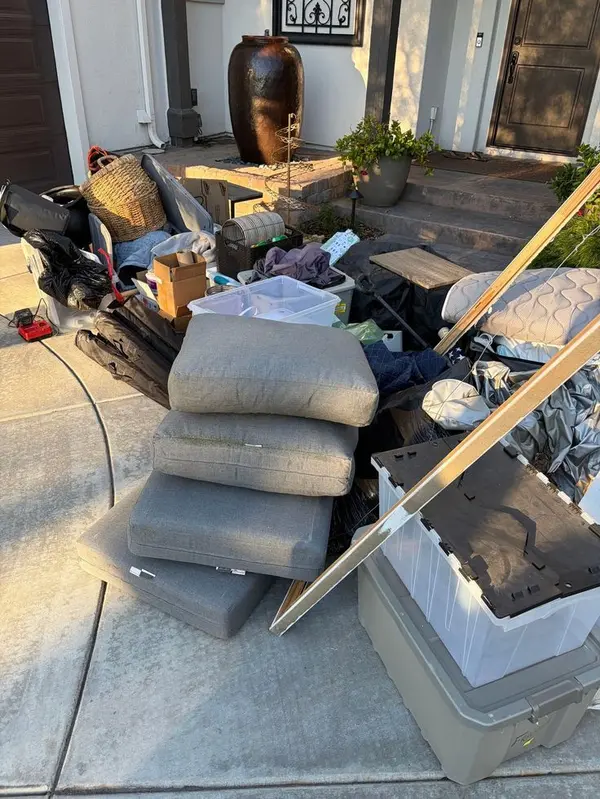
Think About Storage
One of the biggest challenges after downsizing is realizing how much storage you used to have.
Before purchasing, consider where you'll store:
- Seasonal items
- Luggage
- Holiday decorations
- Tools
- Sports equipment
- Important documents
- Household supplies
Don't underestimate the value of a garage, storage unit, pantry, or well-designed closets.
At the same time, don't use storage as an excuse to keep everything you've accumulated.
Think About Your Furniture
Your furniture should also influence your home search.
If you're moving from a large family home into a smaller property, measure your major pieces before making an offer.
Consider:
- Sofa dimensions
- Dining table size
- Bed sizes
- Dressers
- Cabinets
- Outdoor furniture
Knowing what you're keeping can help you determine how much space you actually need.
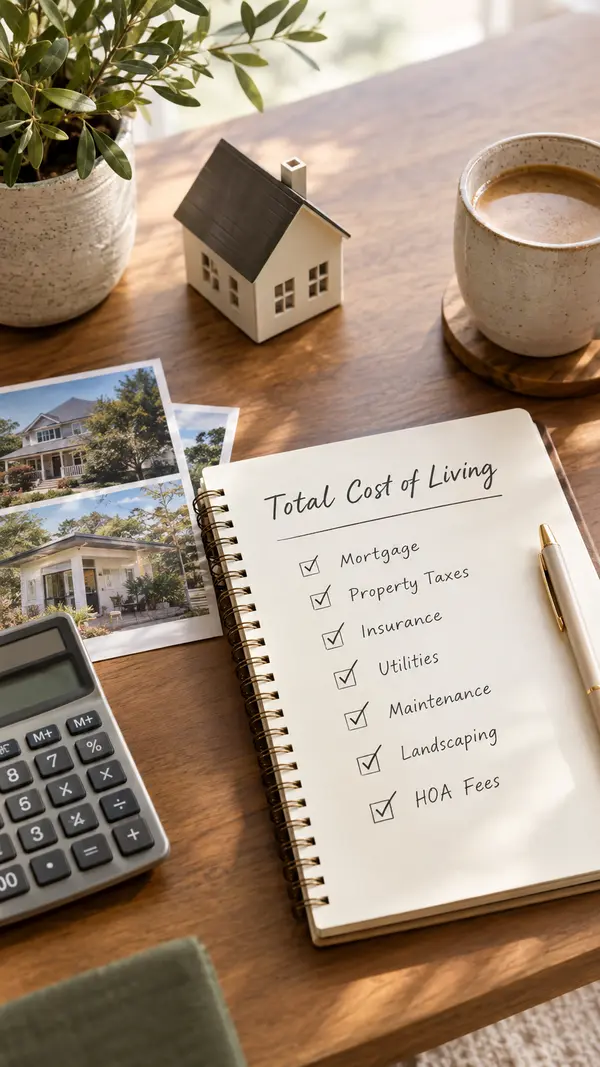
Consider the Financial Side of Downsizing
Downsizing can potentially reduce your housing costs, but that isn't guaranteed.
A smaller home may still have significant expenses.
Consider:
- Purchase price
- Property taxes
- HOA dues
- Insurance
- Maintenance
- Utilities
- Parking
- Special assessments
- Mortgage costs
A condominium with a lower purchase price but high HOA dues may not provide the savings you expect.
Look at the total cost of ownership.
What If You Have Significant Equity?
If you've owned your Bay Area home for many years, you may have substantial equity.
Downsizing could potentially allow you to:
- Purchase a smaller property
- Reduce your mortgage
- Access equity
- Increase cash reserves
- Reallocate assets
However, the financial implications of selling and buying can be significant.
Consider transaction costs, taxes, financing, and your broader financial goals before assuming that downsizing will automatically create substantial savings.
Should You Buy Before Selling?
This depends on your financial position and circumstances.
Some homeowners prefer to sell first so they know exactly how much capital they have available.
Others may want to purchase their next home before selling to avoid a temporary move.
Each approach has advantages and risks.
If your next purchase depends on proceeds from your current home, understanding your likely net proceeds before shopping can help you establish a realistic budget.
Don't Choose a Neighborhood Solely Based on Price
Price is important, but it shouldn't be the only consideration.
When comparing neighborhoods, look at:
- Walkability
- Transportation
- Amenities
- Healthcare access
- Property taxes
- HOA costs
- Housing inventory
- Neighborhood character
- Resale potential
The cheapest property may not provide the lifestyle you actually want.
Think About the Next 5–10 Years
Downsizing is often intended to be a long-term move.
Ask:
Will this home still work for me five or ten years from now?
Think about:
- Stairs
- Maintenance
- Transportation
- Healthcare access
- Guest accommodations
- Storage
- Neighborhood amenities
- Proximity to family
You don't need to predict the future.
But choosing a home that can adapt to changing needs can make your next move more sustainable.
A Simple Bay Area Downsizing Checklist
Before choosing your next home, identify your priorities.
Location
- How close do I want to be to family?
- Do I want to walk to restaurants and stores?
- How important is public transportation?
- Do I want to remain in my current community?
Home
- How many bedrooms do I really need?
- Do I want a condo, townhome, or single-family home?
- Do I want one-level living?
- How much outdoor space do I need?
Financial
- What is my realistic budget?
- How much equity will I have after selling?
- What are the HOA costs?
- What will my monthly housing costs be?
Lifestyle
- How much maintenance do I want?
- Do I want more time for travel?
- Do I want to spend more time outdoors?
- How important are restaurants, shopping, and entertainment?
The Bottom Line
Where should you move after downsizing?
The answer may not be the smallest home you can find.
Instead, look for the home that best matches the life you want to live.
That could mean a condominium in a walkable neighborhood, a townhome with less maintenance, a smaller single-family home near family, or simply a smaller property in the community you already love.
The best downsizing decision combines location, lifestyle, financial practicality, and long-term usability.
Before you start looking at listings, define what you want your next chapter to look like.
Then find the home that supports it.
About Parisa Samimi
With 25 years of experience in residential and investment real estate, Parisa is recognized as a leading top producer across the San Francisco Bay Area. Her background as a real estate appraiser gives her a rare valuation advantage, allowing clients to make informed, strategic decisions in every market condition.
Parisa's work is defined by precision, integrity, and an unwavering attention to detail. She brings a hands-on, solutions-driven approach to every transaction, ensuring that both buyers and sellers feel guided, protected, and empowered throughout the process.
Her passion for the business is evident in the energy and care she brings to each client relationship, qualities that consistently set her apart. Actively representing both buyers and sellers, Parisa is known for her deep market knowledge, strong negotiation skills, and commitment to achieving exceptional results.
Whether preparing a home for the market, navigating complex investment opportunities, or helping clients find the perfect property, she delivers a thoughtful and elevated experience at every step.
Planning Your Next Move After Downsizing?
Choosing your next home is about more than finding fewer square feet.
Contact Parisa Samimi for a personalized Bay Area downsizing and home-buying consultation.
With 25 years of experience in residential and investment real estate and a background as a real estate appraiser, Parisa can help you evaluate neighborhoods, compare properties, understand market values, and make a strategic decision about your next home.
Your next home should fit not only your belongings—but the life you want to live.
Categories
Recent Posts




GET MORE INFORMATION

Parisa Samimi
Founder & Real Estate Broker License ID: 01858122
Founder & Real Estate Broker License ID: 01858122