
Capital Gains and Trust Property Sales: What Trustees Should Know
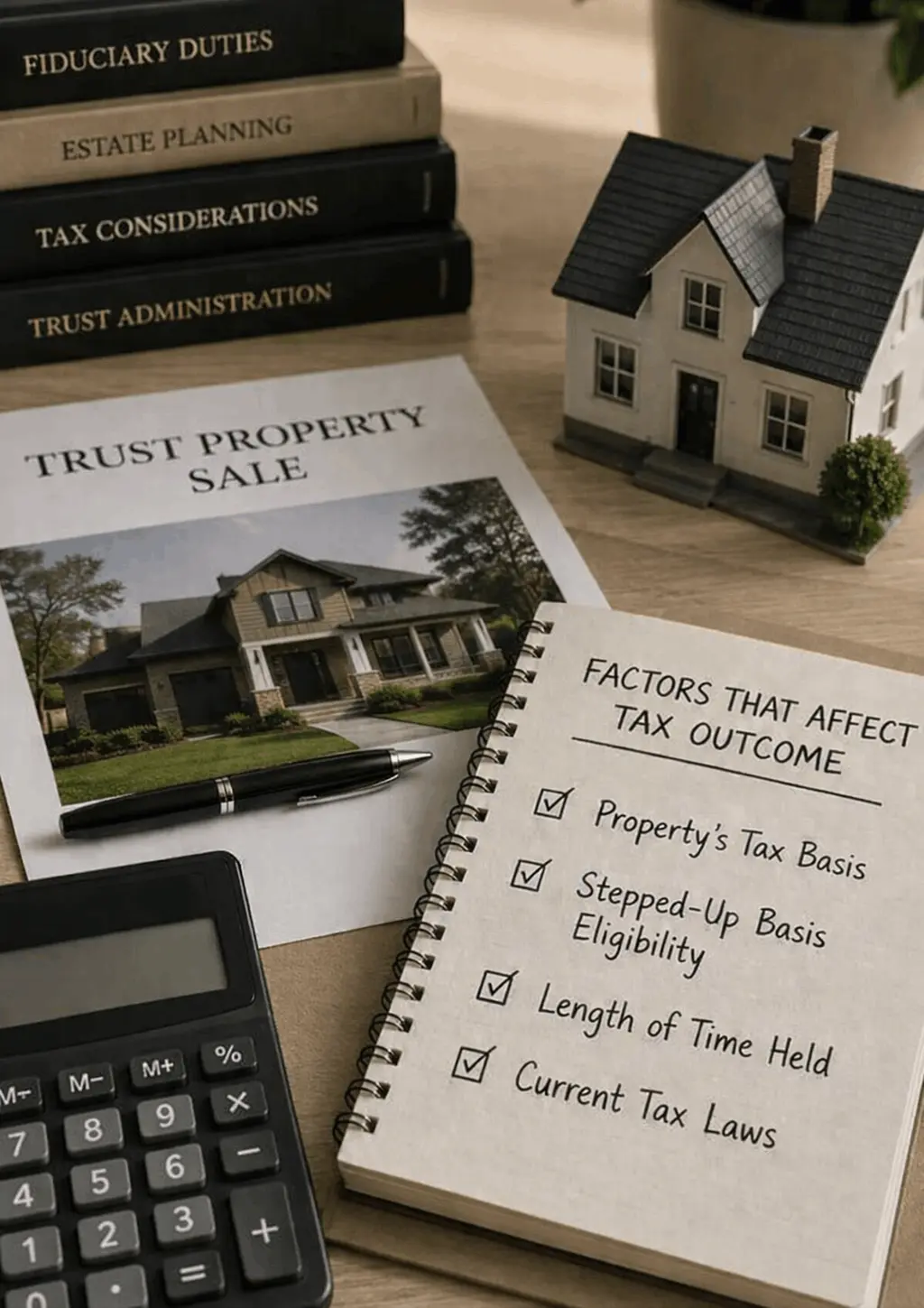
One of the most common concerns trustees have when preparing to sell a trust-owned home is whether the sale will trigger capital gains taxes. While many trustees understand that taxes may apply, the rules surrounding trusts, inherited property, and the stepped-up basis can be confusing.
The good news is that many beneficiaries receive favorable tax treatment when property is inherited, but every trust is different. The type of trust, when the property was transferred, the property's cost basis, and current tax laws all play a role in determining whether capital gains taxes will be owed.
Although trustees are responsible for managing the sale of the property, they are not expected to become tax experts. Instead, they should understand the key concepts, recognize potential tax issues early, and work closely with qualified professionals to ensure the trust complies with all applicable tax laws.
This guide explains the basics of capital gains taxes, how they may apply to trust property sales, and what trustees should consider before listing a home.
Featured Snippet
Do trustees pay capital gains tax when selling a trust property?
Capital gains taxes may apply when a trust-owned property is sold, but the amount depends on several factors, including the property's tax basis, whether it received a stepped-up basis after the owner's death, the sale price, and applicable federal and California tax laws. Trustees should work with a CPA or tax professional to determine the tax consequences before completing the sale.
What Are Capital Gains Taxes?
Capital gains tax is a tax on the profit realized when an asset is sold for more than its adjusted tax basis.
For real estate, the gain is generally calculated as:
Sale Price – Adjusted Tax Basis = Capital Gain
However, determining the adjusted tax basis for trust property is often more complicated than simply looking at the original purchase price.
Understanding Cost Basis
A property's cost basis generally begins with what the original owner paid for the home, plus certain qualifying improvements made over the years.
The adjusted basis may include:
- Original purchase price
- Major renovations and capital improvements
- Certain closing costs
- Other eligible adjustments
The adjusted basis is then compared to the final sales price to determine whether a taxable gain exists.
What Is a Stepped-Up Basis?
One of the most valuable tax benefits associated with inherited real estate is the stepped-up basis.
In many situations, when a property owner passes away, the tax basis of the property is adjusted to its fair market value on the date of death (or an alternate valuation date if permitted under tax law).
This means beneficiaries may inherit property with a significantly higher tax basis than the original owner had during their lifetime.
For example:
- Original purchase price: $250,000
- Fair market value at owner's death: $1,150,000
- New stepped-up basis: $1,150,000
If the property is sold shortly after inheritance for approximately its stepped-up value, the taxable capital gain may be minimal or even nonexistent.
However, every situation is unique, and trustees should consult a qualified tax professional to determine how the rules apply to their specific circumstances.
Does Every Trust Receive a Stepped-Up Basis?
Not necessarily.
Whether a property receives a stepped-up basis depends on several factors, including:
- The type of trust
- Ownership structure
- Applicable tax laws
- How and when the trust was established
- Whether the property was included in the taxable estate
Because trust structures vary, trustees should never assume that a stepped-up basis automatically applies.
Capital Improvements Can Affect Taxes
Trustees should maintain records of significant improvements made to the property.
Examples include:
- Room additions
- Roof replacement
- Kitchen remodels
- Bathroom renovations
- HVAC replacement
- New plumbing or electrical systems
These improvements may increase the property's adjusted basis, potentially reducing taxable gains when the property is sold.
Routine maintenance, such as painting or minor repairs, generally does not increase tax basis.
Selling Soon After Inheritance vs. Waiting
Timing can affect both the property's market value and potential tax consequences.
If the property appreciates significantly after the owner's death, additional appreciation occurring after the stepped-up basis date may be subject to capital gains taxes when sold.
For example:
- Fair market value at inheritance: $1,000,000
- Sale price two years later: $1,300,000
The additional appreciation may be taxable, depending on the trust's circumstances and applicable tax laws.
This is one reason trustees often evaluate both market conditions and tax implications before deciding when to sell.
Expenses That May Reduce Taxable Gain
Certain selling expenses may reduce the amount of taxable gain.
Examples may include:
- Real estate commissions
- Escrow fees
- Title insurance
- Transfer taxes
- Certain legal fees
- Qualified closing costs
Proper documentation of these expenses is essential for accurate tax reporting.
A CPA can advise which expenses are deductible under current tax rules.
California Tax Considerations
Trustees selling property in California should remember that both federal and state tax rules may apply.
California has its own tax laws that can affect trust administration and real estate sales. Additionally, property tax reassessment rules, income tax considerations, and reporting requirements may differ from federal regulations.
Because tax laws change over time, trustees should seek current professional advice before making financial decisions.
Common Tax Mistakes Trustees Should Avoid
Although trustees are not expected to prepare tax returns themselves, there are several common mistakes that can create unnecessary problems.
Assuming No Taxes Will Be Owed
Receiving inherited property does not automatically eliminate tax obligations.
Every trust should be reviewed individually.
Failing to Document Improvements
Missing records may make it more difficult to establish the property's adjusted basis.
Maintaining organized documentation can help support tax calculations.
Ignoring Professional Advice
Tax laws involving trusts, estates, and inherited property are complex.
Consulting a CPA early in the process may help avoid costly mistakes.
Waiting Until After the Sale
Tax planning is generally most effective before the property is sold.
Discussing the transaction with tax professionals early allows trustees to understand potential consequences and prepare accordingly.
Why Trustees Should Build the Right Team
Selling trust property often requires collaboration among several professionals.
A trustee's advisory team may include:
- Estate planning attorney
- Certified Public Accountant (CPA)
- Financial advisor
- Escrow officer
- Title company
- Experienced trust real estate agent
Each professional plays a different role in helping the trustee fulfill legal, financial, and fiduciary responsibilities.
Frequently Asked Questions
Do trustees pay capital gains tax themselves?
Not necessarily. The trust or beneficiaries may be responsible for taxes depending on how the trust is structured and how the sale is reported. Trustees should consult a qualified tax professional for guidance.
What is the stepped-up basis?
A stepped-up basis is an adjustment to the property's tax basis that often reflects its fair market value at the owner's date of death, potentially reducing future capital gains taxes.
Does every inherited property qualify for a stepped-up basis?
No. Eligibility depends on several legal and tax factors, including the type of trust and applicable tax laws.
Should trustees speak with a CPA before listing the property?
Yes. Early tax planning can help trustees understand potential tax consequences, prepare documentation, and make informed decisions before accepting an offer.
Final Thoughts
Capital gains taxes are one of the most important financial considerations when selling a trust-owned property. While concepts such as adjusted basis and stepped-up basis can provide valuable tax advantages, the rules vary depending on the trust structure and individual circumstances.
Trustees don't need to master every aspect of tax law, but they do have a responsibility to recognize potential issues and seek guidance from qualified professionals. By understanding the fundamentals, maintaining accurate records, and assembling an experienced advisory team, trustees can make informed decisions that protect both the trust and its beneficiaries.
Ready to Sell a Trust Property?
Selling a trust-owned home involves much more than preparing the property for market—it requires thoughtful planning, careful pricing, and coordination with legal and financial professionals.
With seventeen years of experience in residential and investment real estate and a background as a former real estate appraiser, Parisa helps trustees confidently navigate every stage of the sales process. She works closely with attorneys, CPAs, escrow officers, and families to develop pricing strategies, prepare homes for market, and maximize value while supporting trustees in fulfilling their fiduciary responsibilities.
If you're preparing to sell a trust-owned property in the San Francisco Bay Area, contact Parisa today for a confidential consultation and personalized guidance.
About Parisa
With 25 years of experience in residential and investment real estate, Parisa is recognized as a leading top producer across the San Francisco Bay Area. Her background as a real estate appraiser gives her a rare valuation advantage, allowing clients to make informed, strategic decisions in every market condition.
Parisa's work is defined by precision, integrity, and an unwavering attention to detail. She brings a hands-on, solutions-driven approach to every transaction, ensuring that both buyers and sellers feel guided, protected, and empowered throughout the process. Her passion for the business is evident in the energy and care she brings to each client relationship, qualities that consistently set her apart. Actively representing both buyers and sellers, Parisa is known for her deep market knowledge, strong negotiation skills, and commitment to achieving exceptional results. Whether preparing a home for the market, navigating complex investment opportunities, or helping clients find the perfect property, she delivers a thoughtful and elevated experience at every step.
Categories
Recent Posts








GET MORE INFORMATION

Parisa Samimi
Founder & Real Estate Broker License ID: 01858122
Founder & Real Estate Broker License ID: 01858122