
What documents are required to sell a trust property?
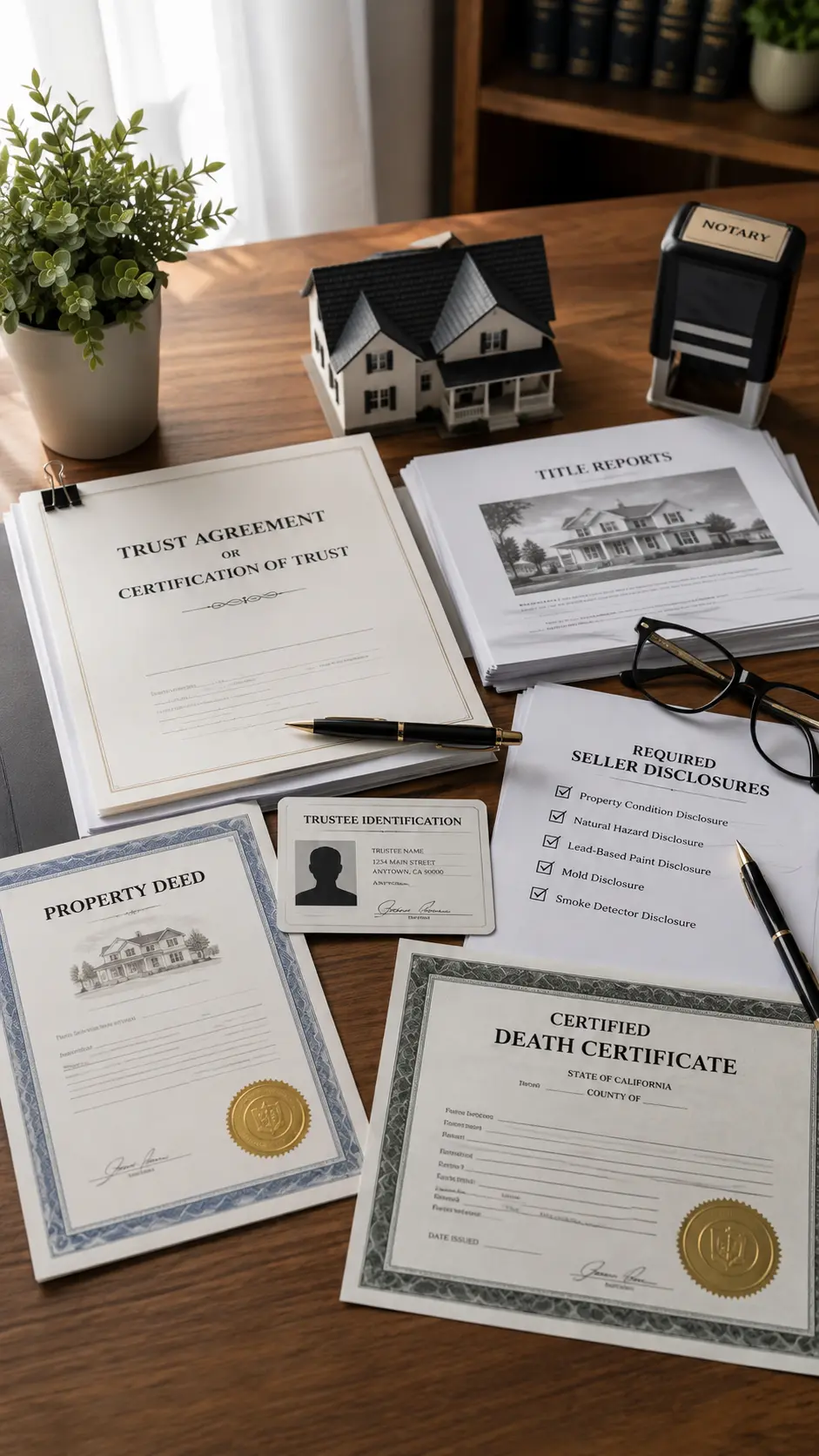
Selling a home held in a trust involves more than preparing the property for the market. Trustees must also gather a variety of legal and financial documents that verify their authority, satisfy escrow requirements, and help ensure a smooth transaction.
Many first-time trustees are surprised to learn that a trust sale requires additional paperwork beyond a traditional real estate transaction. Missing or incomplete documentation can delay escrow, create title issues, or even postpone the closing date.
Whether you're administering a family trust or selling an inherited property, understanding which documents you'll need before listing the home can help streamline the process and reduce unnecessary stress.
Why Documentation Matters in a Trust Sale
Unlike a standard home sale, the seller is not an individual homeowner—the trust is the legal owner of the property. Before a buyer can purchase the home, title and escrow companies must verify that the trustee has the legal authority to sell.
Having the necessary paperwork organized before listing the property helps:
- Prevent delays during escrow
- Verify the trustee's authority
- Satisfy title company requirements
- Reduce last-minute legal issues
- Build buyer confidence
- Keep the transaction moving toward a timely closing
Working with an experienced trust and estate real estate professional can help ensure that all required documents are identified early in the process.
1. The Trust Agreement
The trust agreement is one of the most important documents in any trust sale.
It outlines:
- The name of the trust
- The trustee(s)
- Successor trustees
- Powers granted to the trustee
- Instructions regarding trust assets
In many cases, the entire trust document does not need to be shared with buyers. Instead, the title company may request only the relevant sections or a Certification of Trust.
2. Certification of Trust
A Certification of Trust is commonly used instead of providing the complete trust agreement.
This document typically confirms:
- The trust exists
- The trust is valid
- The trustee has authority
- The trustee's powers
- The trust's legal name
Providing a Certification of Trust helps protect the privacy of the trust while giving escrow and title companies the information they need.
3. Death Certificate (If Applicable)
If the property is being sold after the death of the original trust creator, escrow will generally require a certified copy of the death certificate.
This document establishes that the successor trustee now has authority to administer the trust and manage its assets.
Obtaining multiple certified copies early can help expedite the process, as several institutions may require original certified documents.
4. Property Deed
The current deed confirms ownership and verifies that the property is titled in the name of the trust.
Escrow and title companies will review the deed to ensure:
- The trust legally owns the property
- Ownership records are accurate
- There are no unexpected title issues
If the property was never transferred into the trust, additional legal steps may be required before it can be sold as a trust asset.
5. Government-Issued Identification
Trustees will need valid identification to complete listing paperwork, notarized documents, and escrow instructions.
Common forms include:
- Driver's license
- Passport
- State-issued identification
Escrow companies are required to verify identity as part of the closing process.
6. Preliminary Title Report
A preliminary title report identifies matters affecting ownership, including:
- Existing liens
- Easements
- Property tax obligations
- Recorded restrictions
- Outstanding encumbrances
Reviewing the report early gives trustees time to address any issues before they delay closing.
7. Required Seller Disclosures
Although trust sales may qualify for certain disclosure exemptions under California law, trustees are still often required to provide disclosures based on the property's condition and the trustee's knowledge.
Depending on the circumstances, required documents may include:
- Transfer Disclosure Statement (if applicable)
- Seller Property Questionnaire (if applicable)
- Natural Hazard Disclosure
- Lead-Based Paint Disclosure (for homes built before 1978)
- Local disclosure forms
- Environmental hazard disclosures
Understanding which disclosures apply is essential to reducing potential liability.
8. Property Tax Information
Escrow will need information regarding:
- Current property taxes
- Supplemental tax assessments
- Outstanding balances
- Special assessments
Providing accurate tax records helps avoid closing delays.
9. Mortgage or Loan Information
If the property still has financing attached, trustees should gather:
- Loan statements
- Payoff information
- Lender contact information
- Home equity loan details
Escrow will coordinate with lenders to obtain payoff figures before closing.
10. Homeowners Association Documents (If Applicable)
If the property is located within an HOA, additional documents may include:
- HOA governing documents
- Monthly dues information
- Special assessments
- Reserve studies
- HOA transfer requirements
These documents are commonly required before escrow can close.
11. Property Insurance Information
Insurance records may be requested while the property remains in the trust's ownership.
Maintaining appropriate insurance coverage until the transaction closes helps protect the trust's assets.
12. Inspection Reports
Many trustees choose to complete inspections before listing the property.
Common reports include:
- General home inspection
- Roof inspection
- Pest inspection
- Sewer lateral inspection (where applicable)
- Chimney inspection
- Foundation evaluation
Providing inspection reports upfront can increase buyer confidence and reduce renegotiations.
Common Mistakes Trustees Make
One of the biggest reasons trust sales are delayed is incomplete documentation.
Some common mistakes include:
- Waiting until escrow to gather trust documents
- Not confirming trustee authority
- Failing to review title issues early
- Forgetting local disclosure requirements
- Overlooking HOA documentation
- Misplacing certified death certificates
Preparing documents before listing the property helps create a smoother experience for everyone involved.
Frequently Asked Questions
Do I need the entire trust agreement to sell the property?
Not always. In many cases, a Certification of Trust provides the information required by title and escrow while keeping the full trust document private.
Can I sell the property if it wasn't transferred into the trust?
Possibly, but additional legal steps may be required. An estate planning attorney can advise on the best course of action.
Who prepares the trust documents for escrow?
The trustee typically provides trust-related documents, while the title company, escrow officer, and attorney may assist in reviewing and verifying them.
Should I gather documents before contacting a real estate agent?
Yes. Organizing the paperwork early allows your agent to prepare a smoother listing process and identify any potential issues before the home goes on the market.
Final Thoughts
Selling a trust-owned home requires careful preparation, and having the right documents in place is one of the most important steps. From verifying trustee authority to providing the necessary disclosures, organized documentation helps protect the trust, instills confidence in buyers, and keeps the transaction on track.
By assembling these records before listing the property, trustees can reduce delays, avoid unexpected complications, and move through escrow more efficiently.
Ready to Sell a Trust Property?
If you're preparing to sell a trust-owned home, having an experienced real estate professional by your side can simplify the process.
Parisa works closely with trustees, executors, attorneys, escrow officers, and families to coordinate every aspect of a trust sale. From preparing the property and organizing documentation to developing a pricing strategy and negotiating the strongest possible offer, she provides knowledgeable guidance every step of the way.
Whether you're selling a family home or an investment property held in a trust, Parisa is committed to helping you navigate the transaction with confidence and achieve the best possible outcome.
About Parisa
With 25 years of experience in residential and investment real estate, Parisa is recognized as a leading top producer across the San Francisco Bay Area. Her background as a real estate appraiser gives her a rare valuation advantage, allowing clients to make informed, strategic decisions in every market condition.
Parisa's work is defined by precision, integrity, and an unwavering attention to detail. She brings a hands-on, solutions-driven approach to every transaction, ensuring that both buyers and sellers feel guided, protected, and empowered throughout the process. Her passion for the business is evident in the energy and care she brings to each client relationship, qualities that consistently set her apart. Actively representing both buyers and sellers, Parisa is known for her deep market knowledge, strong negotiation skills, and commitment to achieving exceptional results. Whether preparing a home for the market, navigating complex investment opportunities, or helping clients find the perfect property, she delivers a thoughtful and elevated experience at every step.
Categories
Recent Posts







GET MORE INFORMATION

Parisa Samimi
Founder & Real Estate Broker License ID: 01858122
Founder & Real Estate Broker License ID: 01858122