
How Much Should You Declutter Before Selling Your Bay Area Home?
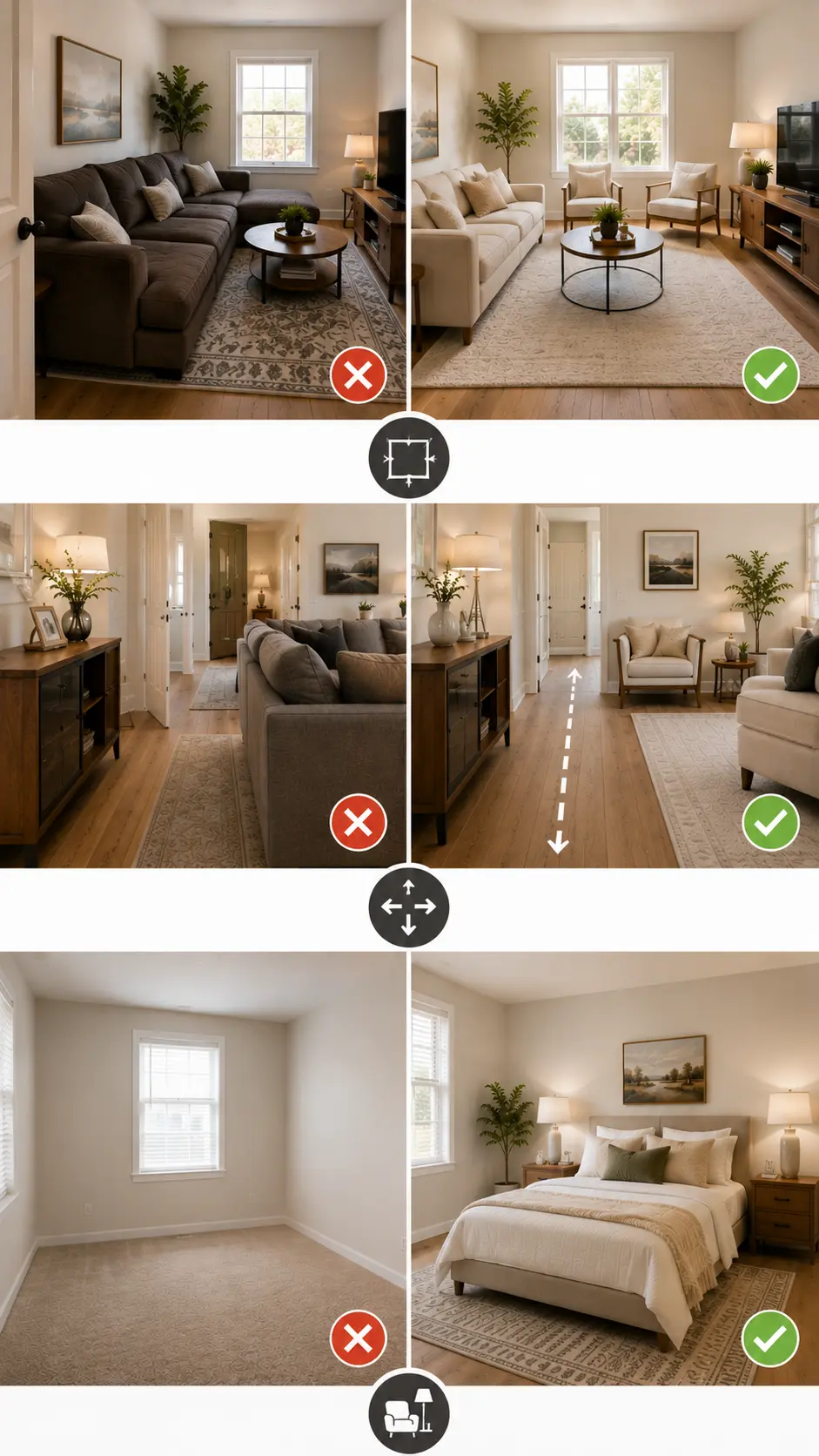
Selling a home in the San Francisco Bay Area often begins long before the listing goes live. One of the most important—and most overlooked—steps is deciding how much to declutter before putting your home on the market.
Many homeowners assume they need to remove almost everything. Others barely change anything because they are still living in the property.
Neither approach is necessarily right.
The goal is to create a home that feels spacious, organized, functional, and easy for buyers to envision as their own—without making unnecessary changes or spending money where it won't improve the selling strategy.
How Much Decluttering Is Enough?
A good rule is:
Declutter until buyers can clearly see the home's space, storage, layout, and features.
You don't need to empty every room.
You do need to eliminate items that make rooms feel:
- Smaller than they actually are
- Crowded
- Difficult to navigate
- Disorganized
- Short on storage
- Too personalized
- Distracting
The right amount of decluttering depends on the property, the neighborhood, the price point, the target buyer, and the home's current condition.
A small Berkeley bungalow, a large El Cerrito family home, and a luxury property in the East Bay may require very different preparation strategies.
Start With the Rooms Buyers Notice Most
Not every part of your home deserves equal attention.
If your time is limited, prioritize the areas that influence a buyer's first impression.
- Living Areas
Start with furniture.
Ask yourself:
Does every piece of furniture help demonstrate how this room can be used?
If the answer is no, consider removing it.
Too many sofas, chairs, tables, bookcases, or decorative pieces can make a room appear smaller.
You want buyers to notice the floor plan, not count your furniture.
- Kitchen Counters
Kitchen counters should be as clear as reasonably possible.
Remove or store:
- Small appliances you rarely use
- Excessive décor
- Mail and paperwork
- Food containers
- Kitchen gadgets
- Large collections of decorative items
A buyer should immediately see the available counter space.
- Closets
Closets are one of the most important places to declutter.
An overflowing closet can make buyers think:
"There isn't enough storage."
Even when the closet is actually adequate.
Remove clothing you don't currently wear and organize the remaining items so there is visible space.
You don't have to empty the closet. You want to demonstrate capacity.
- Primary Bedroom
The primary bedroom should feel comfortable rather than crowded.
Look at:
- Extra chairs
- Large dressers
- Excess bedding
- Exercise equipment
- Storage containers
- Oversized décor
If you have to walk around furniture to get through the room, that's a sign that something may need to go.
- Garage
Don't make the mistake of decluttering the interior of your home while leaving the garage packed from floor to ceiling.
Bay Area buyers frequently care about storage.
A clean, organized garage helps buyers understand how much usable storage the property actually provides.
The 80% Rule Can Help
One practical way to approach closets, cabinets, shelves, and storage areas is to aim for approximately 80% capacity rather than filling every available space.
This isn't a formal real estate rule, but it can be a useful visual guideline.
For example, if a closet is completely packed, buyers may perceive it as too small.
If the same closet has visible empty space, buyers can more easily imagine where their belongings would go.
The same principle applies to:
- Kitchen cabinets
- Bathroom cabinets
- Linen closets
- Pantry shelves
- Garage storage
- Bookshelves
Visible space communicates capacity.
What About Furniture?
Furniture is one of the biggest decluttering decisions sellers face.
Before removing something, consider three questions:
Does it make the room feel smaller?
Does it interfere with traffic flow?
Does it help buyers understand the purpose of the room?
If a large sectional dominates a living room, removing or replacing it may help.
If a dining table makes the room look cramped, reducing the number of chairs may make the space feel larger.
If a bedroom contains a desk, exercise equipment, and multiple dressers, removing unnecessary pieces can clarify the room's primary purpose.
Don't Forget Personal Collections
Collections can be meaningful to you but distracting to buyers.
Examples include:
- Extensive family photographs
- Large artwork collections
- Sports memorabilia
- Figurines
- Extensive books
- Travel souvenirs
- Holiday decorations
- Children's artwork
- Highly specific hobbies
You don't need to remove every personal item.
But reducing visual distractions can help buyers focus on the property itself.
What Should You Keep?
Decluttering does not mean removing everything that makes your house feel like a home.
Keep items that:
- Improve the room's appearance
- Demonstrate functionality
- Add warmth
- Are appropriately scaled
- Help define the purpose of a space
A few well-placed pieces of furniture and décor can actually make a home easier to understand.
The objective isn't empty.
The objective is intentional.
What Should You Store?
Temporary storage can make sense when you're preparing for a sale.
Consider storing:
- Seasonal clothing
- Excess furniture
- Holiday decorations
- Large collections
- Children's items that aren't currently needed
- Extra kitchen equipment
- Boxes of paperwork
- Items you're taking with you but don't need during the listing
But be strategic.
Don't simply move clutter from the living room into the garage.
If necessary, consider off-site storage so the home's storage areas remain accessible and visually organized.
What About Sentimental Belongings?
This is often the most difficult part of downsizing and decluttering.
If you've lived in your Bay Area home for decades, you may have accumulated belongings that carry significant emotional value.
Don't force yourself to make every decision immediately.
Instead, divide belongings into categories:
Keep — Items you're taking to your next home.
Sell — Items that have meaningful financial value.
Donate — Useful items you no longer need.
Give to family — Items that have sentimental or family significance.
Store temporarily — Items you're not ready to decide about.
This approach allows you to prepare the home without turning the process into an emotional crisis.
Should You Declutter Before a Realtor Visits?
Ideally, yes—but don't wait to contact a real estate professional until the entire home is finished.
In fact, an early consultation can help you avoid unnecessary work.
A knowledgeable agent can walk through the property and identify:
- What buyers are likely to notice
- Which rooms need the most attention
- Whether furniture needs to be removed
- Whether staging is appropriate
- Which repairs are worth considering
- Which improvements may not provide a sufficient return
This can prevent sellers from spending weeks decluttering areas that don't materially affect the marketing strategy.
Don't Renovate When Decluttering Will Do
One common mistake is confusing visual clutter with a renovation problem.
For example, an outdated kitchen may look worse because it is crowded with appliances and belongings.
Before assuming you need a major renovation, clear the counters, organize the cabinets, improve the lighting, and evaluate the space again.
The same applies to bathrooms, bedrooms, garages, and living areas.
Sometimes the best improvement is simply removing what is getting in the way.
How Much Should You Declutter If You're Selling Soon?
If you're planning to list within the next few months, don't try to declutter the entire house in one weekend.
Instead, work in stages.
60–90 Days Before Listing
Begin with belongings you don't use regularly.
Pack or remove:
- Seasonal items
- Excess furniture
- Collections
- Storage boxes
- Items you already know you're taking with you
30–60 Days Before Listing
Focus on:
- Closets
- Cabinets
- Garages
- Bedrooms
- Storage spaces
Begin making decisions about furniture and larger belongings.
2–4 Weeks Before Listing
Focus on presentation.
Remove remaining unnecessary items, organize surfaces, simplify décor, and prepare the property for professional photography.
Before Photography
The home should be as close as possible to its final showing condition.
Remember: your listing photos are often the buyer's first experience with your property.
What Bay Area Sellers Should Consider
The Bay Area is not one uniform real estate market.
What works for a property in Berkeley may not be appropriate for a home in Oakland, El Cerrito, Albany, Kensington, or another East Bay community.
Your home's:
- Price range
- Architecture
- Neighborhood
- Lot size
- Buyer demographic
- Competition
- Current condition
- Expected marketing strategy
should all influence how much preparation makes sense.
This is why a generic "declutter everything" approach isn't always the best strategy.
The Goal Isn't to Make Your Home Look Empty
The most successful decluttering strategy creates visual breathing room.
Buyers should be able to walk through the home and understand:
Where would I put my furniture?
Where would I store my belongings?
How would I use this room?
Does this home work for my lifestyle?
When buyers can answer those questions easily, you've probably achieved the right level of decluttering.
The Bottom Line
So, how much should you declutter before selling your Bay Area home?
Enough to allow buyers to clearly see the property's space, functionality, storage, and potential—but not so much that the home loses its warmth and character.
The right strategy is not about getting rid of everything.
It's about making intentional decisions that improve the property's presentation and marketability.
Before you spend money on storage, staging, renovations, or repairs, determine which changes are actually likely to matter in your specific market.
About Parisa Samimi
With 25 years of experience in residential and investment real estate, Parisa is recognized as a leading top producer across the San Francisco Bay Area. Her background as a real estate appraiser gives her a rare valuation advantage, allowing clients to make informed, strategic decisions in every market condition.
Parisa's work is defined by precision, integrity, and an unwavering attention to detail. She brings a hands-on, solutions-driven approach to every transaction, ensuring that both buyers and sellers feel guided, protected, and empowered throughout the process.
Her passion for the business is evident in the energy and care she brings to each client relationship, qualities that consistently set her apart. Actively representing both buyers and sellers, Parisa is known for her deep market knowledge, strong negotiation skills, and commitment to achieving exceptional results.
Whether preparing a home for the market, navigating complex investment opportunities, or helping clients find the perfect property, she delivers a thoughtful and elevated experience at every step.
Ready to Prepare Your Bay Area Home for Sale?
Before you start removing furniture, renting storage, or investing in improvements, get a strategic assessment of your property.
Parisa can help you identify what should stay, what should go, and which preparation steps are most likely to support your home's marketability and selling strategy.
Thinking about selling your Bay Area home? Contact Parisa Samimi for a personalized pre-sale consultation and learn what your property needs—and what it doesn't.
Categories
Recent Posts








GET MORE INFORMATION

Parisa Samimi
Founder & Real Estate Broker License ID: 01858122
Founder & Real Estate Broker License ID: 01858122