
Sell As-Is or Declutter First? How to Decide Before Selling Your Bay Area Home

One of the biggest decisions Bay Area homeowners face before selling is whether to sell the property exactly as it is or spend time and money preparing it first.
For some sellers, selling as-is may be the most practical choice.
For others, a relatively small investment in decluttering, cleaning, repairs, landscaping, or presentation could significantly improve the property's marketability.
The challenge is knowing the difference.
If you're thinking about selling your San Francisco Bay Area or East Bay home, the question shouldn't simply be:
"Should I sell as-is?"
A better question is:
"What preparation, if any, is most likely to improve my financial outcome?"
What Does "Selling As-Is" Actually Mean?
Selling a home "as-is" generally means the seller is offering the property in its current physical condition rather than agreeing to make repairs or improvements before closing.
But as-is does not mean "no disclosures."
California sellers still have disclosure obligations, and buyers may conduct their own inspections and investigations.
"As-is" also doesn't necessarily mean the seller should put the property on the market without cleaning, organizing, or strategically preparing it.
There is a major difference between:
Selling as-is with no unnecessary renovations
and
Listing a home in poor presentation condition.
Those are not the same strategy.
Why Some Bay Area Sellers Choose to Sell As-Is
There are legitimate reasons to avoid extensive preparation.
- The Seller Wants a Faster Sale
Some homeowners need to move quickly because of:
- A job relocation
- Estate or trust administration
- A pending purchase
- Financial considerations
- A major life transition
- An inherited property
- A property that has been vacant
Spending several months preparing the home may not fit their timeline.
- The Property Needs Significant Work
If a property requires extensive renovation, the seller may decide that completing the work themselves isn't financially or logistically practical.
- The Seller Doesn't Want to Manage Contractors
Renovations can involve:
- Contractors
- Permits
- Scheduling
- Material selection
- Inspections
- Unexpected costs
- Delays
Some homeowners would rather sell the property and let the buyer decide what to do with it.
- The Property's Location Is the Primary Attraction
In certain Bay Area neighborhoods, buyers may be willing to take on substantial work because the location, lot, views, architecture, or development potential is particularly desirable.
In those situations, over-improving the property may not make financial sense.
But "As-Is" Doesn't Mean "Leave Everything As It Is"
This is one of the most important distinctions for sellers.
You can sell a home as-is while still:
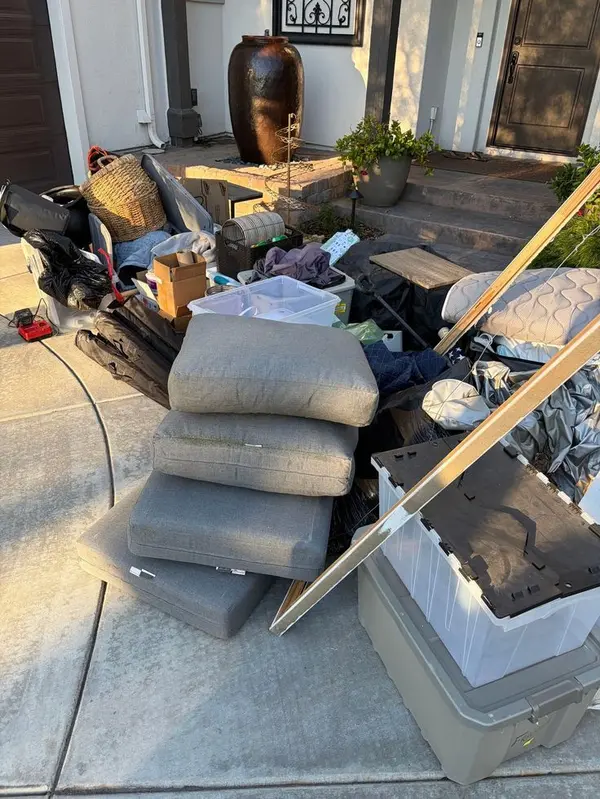
- Decluttering
- Deep cleaning
- Removing excess furniture
- Organizing closets
- Improving curb appeal
- Making minor repairs
- Removing personal belongings
- Improving lighting
- Preparing the home for photography
These steps don't necessarily change the home's physical condition.
They improve how buyers experience it.
Why Decluttering Can Be a Smart Middle Ground
Suppose your home needs an outdated kitchen, but the counters are covered with appliances and personal belongings.
Do you need to remodel the kitchen?
Not necessarily.
Start by removing visual clutter.
Now buyers can see:
- Counter space
- Cabinet layout
- Appliances
- Natural light
- Room dimensions
The kitchen may still be outdated, but buyers can evaluate it more objectively.
That's very different from spending tens of thousands of dollars on a renovation without knowing whether the market will reward that investment.
What Should You Do Before Selling As-Is?
Even when selling as-is, there are several low-cost steps that can make sense.
Declutter
Remove unnecessary belongings and excess furniture.
Deep Clean
A clean home generally presents better than a dirty home—even when the property is being sold in its current condition.
Improve Curb Appeal
Trim landscaping, clean walkways, remove unnecessary items, and make the entrance welcoming.
Improve Lighting
Replace burned-out bulbs and address obviously dark areas.
Make Minor Repairs
Fix inexpensive issues that may unnecessarily distract buyers.
Examples include:
- Loose handles
- Broken light switches
- Leaky faucets
- Damaged screens
- Loose cabinet hardware
- Minor wall damage
Organize Storage
Show buyers the actual capacity of closets, garages, and storage areas.
What About Staging?
Staging can be especially useful when selling as-is because it helps buyers see the home's potential.
The National Association of REALTORS®' 2025 Profile of Home Staging found that 83% of buyers' agents said staging helps buyers visualize the property as their future home. The report also found that decluttering was among the most common recommendations made by sellers' agents.
But staging doesn't necessarily mean bringing in an entirely new set of furniture.
Depending on the property, you might use:
- Existing furniture
- Partial staging
- Selective furniture removal
- Professional styling
- Vacant-home staging
- Virtual staging for certain marketing purposes
The appropriate strategy depends on the property.
When Does Selling As-Is Make More Sense?
Selling as-is may make sense when:
- The property requires substantial renovation
- The seller has limited time
- The seller doesn't want to manage construction
- The home is being sold as part of an estate or trust
- The property has significant deferred maintenance
- The seller wants to minimize upfront expenses
- The property's location or lot is a major selling feature
- The likely buyer is expected to renovate
However, these circumstances don't automatically mean the home should be marketed without preparation.
When Is Preparation More Likely to Make Sense?
Preparing the property may be worthwhile when:
- The home is fundamentally in good condition
- Clutter is the primary presentation problem
- Furniture makes rooms appear small
- The home photographs poorly
- The property is competing against polished listings
- Minor repairs are relatively inexpensive
- The seller wants to maximize buyer interest
- The expected return justifies the preparation cost
The key is return on investment.
Don't Confuse Preparation With Renovation
This distinction can save sellers substantial money.
Preparation
May include:
- Decluttering
- Cleaning
- Landscaping
- Minor repairs
- Paint touch-ups
- Furniture removal
- Staging
Renovation
May include:
- Kitchen remodeling
- Bathroom remodeling
- Flooring replacement
- Window replacement
- Major electrical work
- Structural improvements
- Extensive system upgrades
Preparation is often about making the property look and function as well as possible without fundamentally changing it.
Renovation changes the property itself.
Before undertaking a renovation, determine whether the market is likely to reward the investment.
What About Deferred Maintenance?
This is where sellers should be particularly careful.
A home with known defects can raise concerns for buyers.
Examples may include:
- Roof problems
- Foundation concerns
- Plumbing issues
- Electrical deficiencies
- Water intrusion
- Structural problems
- Sewer issues
Trying to hide or ignore known problems is not the solution.
Instead, sellers should understand their disclosure obligations and work with the appropriate professionals to determine the best strategy.
Sometimes repairing a problem makes sense.
Sometimes disclosing it and pricing accordingly makes more sense.
The answer depends on the property and the market.
Should You Get an Inspection Before Selling?
A pre-sale inspection can sometimes help sellers understand what buyers are likely to discover.
It can provide an opportunity to identify issues before listing and decide which ones, if any, should be addressed.
But whether you should obtain one depends on the property, local practices, transaction strategy, and advice from your real estate and legal professionals.
The important point is to avoid being surprised during escrow.
What About Pricing an As-Is Property?
This is where valuation expertise becomes extremely important.
If a home needs $100,000 of work, you cannot automatically assume:
"I'll just reduce the price by $100,000."
Buyers don't calculate value that simply.
They may consider:
- Cost of repairs
- Contractor risk
- Time required
- Financing limitations
- Permit issues
- Opportunity cost
- Desired profit margin
- Comparable renovated homes
- Comparable fixer properties
A $100,000 renovation project might affect buyer behavior by more—or less—than $100,000.
That's why pricing an as-is property requires more than subtracting estimated repair costs from the value of a renovated home.
How Buyers Evaluate As-Is Homes
Buyers considering an as-is property often look closely at:
Price relative to comparable homes
Estimated renovation costs
Location
Lot characteristics
Potential resale value
Financing options
Inspection findings
Permit history
Structural and system conditions
Time required to complete work
The more uncertainty the buyer perceives, the more compensation they may expect through price.
This is why reducing uncertainty can be valuable even when you're selling as-is.
A Better Strategy: "As-Is, But Market-Ready"
For many Bay Area sellers, the best strategy may be:
Sell as-is—but make the property market-ready.
That could mean:
- Remove excess belongings
- Deep clean
- Improve curb appeal
- Organize the garage
- Make inexpensive repairs
- Improve lighting
- Complete necessary disclosures
- Have professional photography
- Price based on current market data
You aren't pretending the home is renovated.
You're simply presenting the property in the strongest possible way.
What Should You Avoid Spending Money On?
Don't automatically:
- Remodel the entire kitchen
- Replace perfectly functional flooring
- Upgrade every bathroom
- Buy expensive furniture
- Complete cosmetic projects buyers may not value
- Make improvements solely because a neighbor did
- Follow a generic renovation checklist
Every property is different.
A $20,000 improvement that makes sense for one home may be a poor investment for another.
The Bay Area Factor
Bay Area real estate requires a localized approach.
A home in Berkeley, El Cerrito, Oakland, Albany, Kensington, or another East Bay market may attract buyers for very different reasons.
Some buyers prioritize:
- Location
- Walkability
- BART access
- Lot size
- Views
- Architecture
- Schools
- Outdoor space
- Development potential
Others may prioritize move-in readiness.
Understanding who your likely buyer is can help determine how much preparation makes sense.
The Three Questions Every Seller Should Ask
Before deciding whether to sell as-is, ask:
- What is my home worth in its current condition?
Start with the property as it exists today.
- What would the property likely be worth after specific improvements?
Don't assume every improvement creates equal value.
- What is the expected return after accounting for cost, time, and risk?
A project isn't worthwhile simply because it makes the house prettier.
It should support the overall selling strategy.
The Bottom Line
Should you sell your Bay Area home as-is or declutter and prepare it first?
There isn't one answer for every seller.
For some homeowners, selling as-is is the smartest financial and logistical decision.
For others, a relatively modest investment in decluttering, cleaning, repairs, and presentation can create a much stronger market position.
The key is to avoid the two extremes:
Don't over-improve.
Don't under-prepare.
Instead, determine what your specific property needs to compete effectively in today's market.
About Parisa Samimi
With 25 years of experience in residential and investment real estate, Parisa is recognized as a leading top producer across the San Francisco Bay Area. Her background as a real estate appraiser gives her a rare valuation advantage, allowing clients to make informed, strategic decisions in every market condition.
Parisa's work is defined by precision, integrity, and an unwavering attention to detail. She brings a hands-on, solutions-driven approach to every transaction, ensuring that both buyers and sellers feel guided, protected, and empowered throughout the process.
Her passion for the business is evident in the energy and care she brings to each client relationship, qualities that consistently set her apart. Actively representing both buyers and sellers, Parisa is known for her deep market knowledge, strong negotiation skills, and commitment to achieving exceptional results.
Whether preparing a home for the market, navigating complex investment opportunities, or helping clients find the perfect property, she delivers a thoughtful and elevated experience at every step.
Thinking About Selling Your Bay Area Home?
Before you spend money on renovations—or decide to sell completely as-is—get an informed opinion about your property's current market position.
Contact Parisa Samimi for a personalized pre-sale consultation.
With her appraisal background and 25 years of residential and investment real estate experience, Parisa can help you evaluate your property's condition, potential market value, preparation options, and selling strategy.
The goal isn't to spend more. It's to make smarter decisions about what your home actually needs before it goes on the market.
Categories
Recent Posts








GET MORE INFORMATION

Parisa Samimi
Founder & Real Estate Broker License ID: 01858122
Founder & Real Estate Broker License ID: 01858122