
The 10 Biggest Mistakes Trustees Make When Selling Real Estate
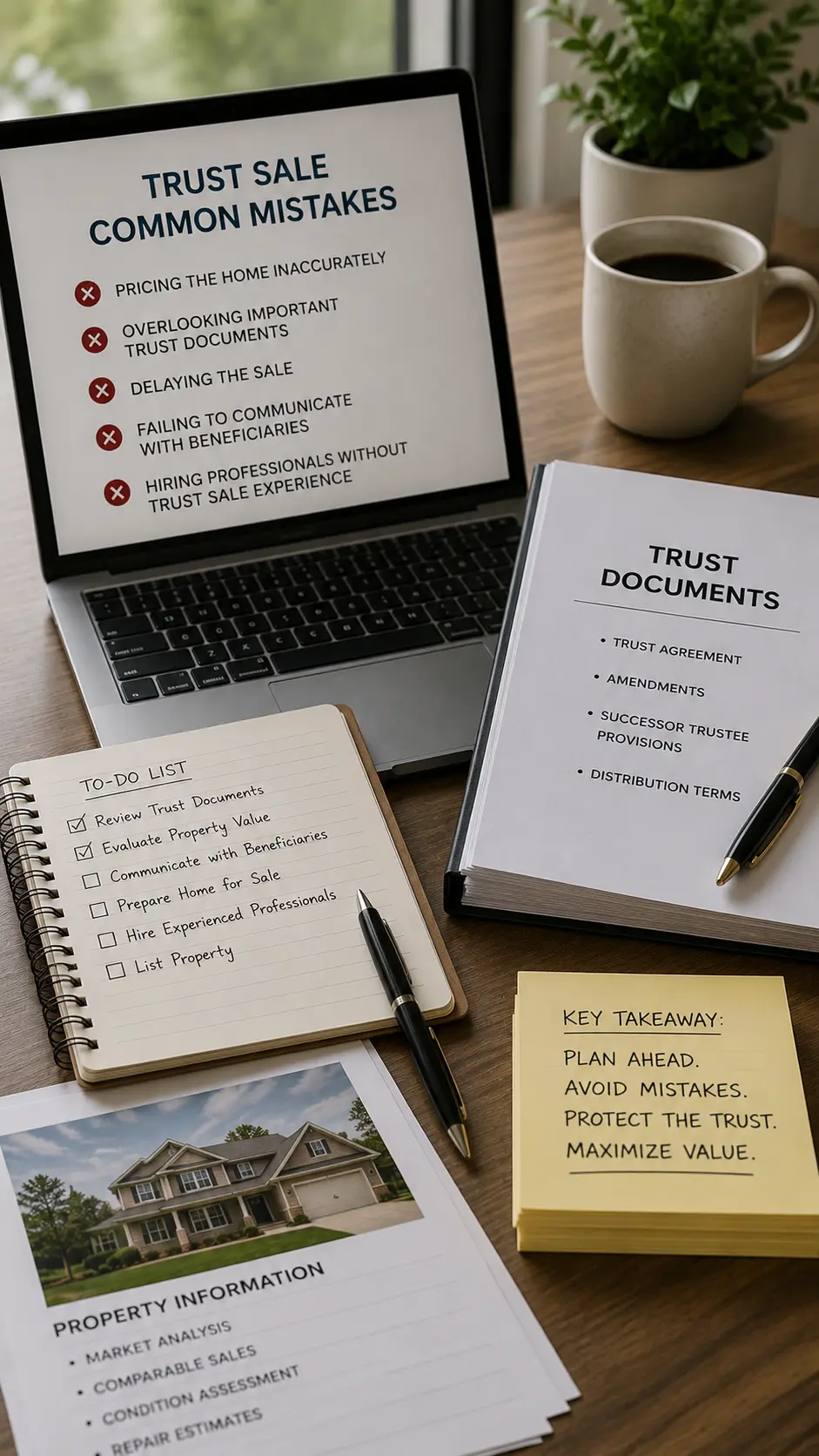
Serving as a trustee is both an honor and a significant legal responsibility. In many cases, trustees are tasked with selling a home that has been in the family for decades while balancing legal obligations, financial considerations, and the emotions of beneficiaries.
Unlike a traditional home sale, a trust sale requires trustees to act as fiduciaries, meaning every decision must be made in the best interests of the beneficiaries. A simple mistake—such as pricing the property incorrectly or failing to communicate with beneficiaries—can delay the transaction, reduce the property's value, or even expose the trustee to legal challenges.
The good news is that most of these mistakes are avoidable with proper planning and the right professional guidance. Here are the ten most common mistakes trustees make when selling real estate—and how to avoid them.
Featured Snippet
What are the biggest mistakes trustees make when selling real estate?
The most common mistakes include failing to understand the trust document, pricing the property incorrectly, neglecting necessary repairs, poor communication with beneficiaries, inadequate recordkeeping, overlooking tax implications, delaying the sale unnecessarily, hiring inexperienced professionals, ignoring market conditions, and failing to fulfill fiduciary duties.
1. Not Understanding the Trust Document
Every trust is unique, and the trust document outlines the trustee's legal authority and responsibilities.
Before making any decisions, trustees should carefully review the trust agreement to understand:
- Their authority to sell the property
- Any restrictions on the sale
- Distribution instructions
- Requirements for co-trustees
- Specific directions from the trust creator
Acting without fully understanding the trust can lead to unnecessary complications or legal disputes.
How to avoid it: Review the trust with an estate planning attorney before listing the property.
2. Pricing the Property Incorrectly
Pricing is one of the most important decisions in any real estate transaction.
Overpricing can cause the home to sit on the market, leading buyers to question its value. Underpricing may reduce the proceeds available to beneficiaries and raise concerns about whether the trustee fulfilled their fiduciary duty.
Trustees should rely on objective market data—not emotions or online estimates.
How to avoid it: Obtain a Comparative Market Analysis (CMA) from an experienced real estate professional and consider a professional appraisal when appropriate.
3. Skipping Property Preparation
Many trustees assume selling a home "as-is" is always the best option. While that may be appropriate in some situations, neglecting simple improvements can reduce buyer interest and lower offers.
Cost-effective updates often include:
- Professional cleaning
- Fresh paint
- Landscaping
- Minor repairs
- Decluttering
- Professional staging
These improvements can significantly enhance the property's appeal without requiring a major investment.
How to avoid it: Evaluate which improvements provide the highest return on investment before listing.
4. Poor Communication with Beneficiaries
Beneficiaries may not have decision-making authority, but they often expect to be informed throughout the process.
Lack of communication can create misunderstandings, suspicion, and unnecessary conflict.
Regular updates regarding:
- The listing process
- Offers received
- Inspection results
- Closing timelines
can help build trust and reduce disputes.
How to avoid it: Establish clear and consistent communication from the beginning.
5. Failing to Keep Accurate Records
Trustees should document every major decision made during the sale.
Important records include:
- Comparative Market Analyses
- Appraisals
- Repair estimates
- Inspection reports
- Contracts
- Escrow documents
- Communications with beneficiaries
Detailed records demonstrate that the trustee acted prudently and fulfilled fiduciary responsibilities.
How to avoid it: Maintain organized digital and physical files throughout the transaction.
6. Ignoring Tax Implications
Selling a trust-owned property may involve capital gains taxes, stepped-up basis considerations, and other tax issues.
Waiting until after the sale to discuss taxes can lead to costly surprises.
How to avoid it: Consult with a qualified CPA or tax professional before listing the property.
7. Waiting Too Long to Sell
Some trustees postpone selling because of emotional attachment, family disagreements, or uncertainty about the market.
However, delays can increase carrying costs, including:
- Mortgage payments
- Property taxes
- Insurance
- Utilities
- Maintenance
In changing markets, waiting too long can also affect the property's value.
How to avoid it: Develop a timeline and make decisions based on market conditions and the trust's objectives rather than emotions.
8. Hiring Professionals Without Trust Sale Experience
Trust sales involve legal, financial, and procedural considerations that differ from traditional home sales.
An agent who rarely handles trust transactions may overlook important details related to disclosures, documentation, or fiduciary responsibilities.
How to avoid it: Build a team that includes experienced trust and estate professionals, such as a real estate agent, estate planning attorney, CPA, escrow officer, and title company.
9. Ignoring Current Market Conditions
Real estate markets change constantly.
Factors such as:
- Interest rates
- Housing inventory
- Buyer demand
- Local economic conditions
can all influence the best pricing and marketing strategy.
Ignoring these conditions may result in missed opportunities.
How to avoid it: Review current market data with your real estate professional before listing the property.
10. Forgetting the Fiduciary Duty
Perhaps the most important mistake is losing sight of the trustee's fiduciary responsibility.
Every decision should be made with the beneficiaries' best interests in mind—not personal preferences or convenience.
Trustees should ask:
- Does this decision protect the trust's assets?
- Is it supported by market data?
- Is it properly documented?
- Would I be comfortable explaining this decision to the beneficiaries or a court?
Keeping fiduciary responsibilities at the center of every decision helps reduce risk and build confidence throughout the transaction.
Best Practices for a Successful Trust Sale
Trustees who achieve successful outcomes often follow a consistent approach:
- Review the trust document carefully.
- Assemble an experienced professional team.
- Obtain an accurate valuation.
- Prepare the home strategically.
- Communicate with beneficiaries.
- Maintain detailed documentation.
- Consider tax implications early.
- Monitor market conditions.
- Price the property appropriately.
- Focus on fulfilling fiduciary responsibilities.
Taking these proactive steps can help streamline the process while protecting both the trustee and the beneficiaries.
Frequently Asked Questions
What is the biggest mistake trustees make when selling real estate?
One of the most common mistakes is pricing the property incorrectly. An inaccurate listing price can reduce buyer interest, extend time on the market, or result in lower proceeds for the beneficiaries.
Can a trustee be held liable for mistakes?
Yes. Trustees have fiduciary duties and may be held accountable if they fail to act prudently, follow the trust document, or protect the interests of the beneficiaries.
Should trustees renovate before selling?
It depends on the property's condition and expected return on investment. Minor improvements often provide strong value, while major renovations may not always be necessary.
Why is documentation so important?
Maintaining records of pricing decisions, repairs, communications, and financial transactions demonstrates that the trustee acted responsibly and in accordance with fiduciary obligations.
Final Thoughts
Selling real estate on behalf of a trust is far more complex than a typical home sale. Trustees must balance legal responsibilities, financial considerations, and family dynamics while making decisions that protect the interests of the beneficiaries.
Fortunately, the most common mistakes are preventable. By understanding the trust document, relying on objective market data, maintaining clear communication, and working with experienced professionals, trustees can navigate the process with confidence and help ensure a successful outcome.
Ready to Sell a Trust Property with Confidence?
Managing a trust sale can feel overwhelming, especially if it's your first time serving as a trustee. From pricing the property accurately and preparing it for the market to coordinating disclosures, negotiations, and closing, every step requires thoughtful planning and informed decision-making.
With seventeen years of experience in residential and investment real estate and a background as a former real estate appraiser, Parisa helps trustees confidently navigate every stage of the sales process. Her valuation expertise, strategic marketing approach, and commitment to protecting her clients' interests make her a trusted resource for trust and estate real estate throughout the San Francisco Bay Area.
If you're preparing to sell a trust-owned home, contact Parisa today for a confidential consultation and learn how experienced guidance can help you avoid costly mistakes and maximize your property's value.
About Parisa
With 25 years of experience in residential and investment real estate, Parisa is recognized as a leading top producer across the San Francisco Bay Area. Her background as a real estate appraiser gives her a rare valuation advantage, allowing clients to make informed, strategic decisions in every market condition.
Parisa's work is defined by precision, integrity, and an unwavering attention to detail. She brings a hands-on, solutions-driven approach to every transaction, ensuring that both buyers and sellers feel guided, protected, and empowered throughout the process. Her passion for the business is evident in the energy and care she brings to each client relationship, qualities that consistently set her apart. Actively representing both buyers and sellers, Parisa is known for her deep market knowledge, strong negotiation skills, and commitment to achieving exceptional results. Whether preparing a home for the market, navigating complex investment opportunities, or helping clients find the perfect property, she delivers a thoughtful and elevated experience at every step.
Categories
Recent Posts








GET MORE INFORMATION

Parisa Samimi
Founder & Real Estate Broker License ID: 01858122
Founder & Real Estate Broker License ID: 01858122